
China’s Origin Wukong: Pioneering the Era of Quantum Computing and Cryptographic Resilience
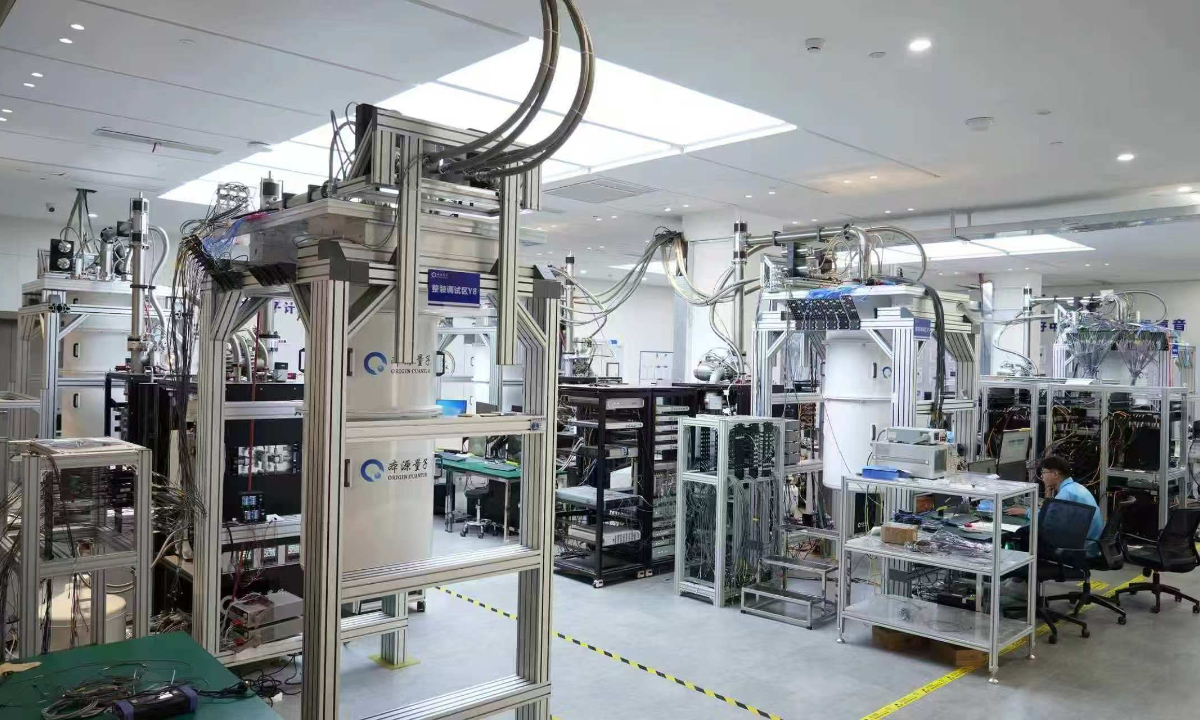
The recent milestone announced by the Anhui Quantum Computing Engineering Research Center—confirming that the "Origin Wukong" superconducting quantum computer has successfully processed over 1 million global tasks—is a clear indicator that quantum technology is rapidly transitioning from a theoretical research discipline to a tangible, service-oriented industrial platform. This development is not merely a benchmark of computational speed; it represents a critical evolution in the "spear-and-shield" architecture, where high-performance quantum processing is balanced against the necessity of post-quantum cryptographic (PQC) security.
From an industry standpoint, the dual-capability model of Origin Wukong addresses the most significant risk associated with the quantum era: the potential obsolescence of current encryption standards. With current classical cryptographic systems relying on factorization problems that powerful quantum machines could solve in a fraction of the time, the integration of the "Origin Rock" software cryptographic module is a strategic necessity. By deploying this PQC defense system, the platform is proactively mitigating the risk of quantum-enabled data breaches. This is a timely move, especially considering projections that estimate major cryptographic disruption could occur within the next 5 to 10 years, necessitating an immediate transition to quantum-resistant standards.
The data underscores a global demand for this technology. With over 49 million remote visits originating from 192 different countries and regions, the accessibility of the Origin Wukong platform suggests that quantum-as-a-service (QaaS) is moving toward a mature, high-traffic operational phase. For stakeholders in the technology sector, the stability of this system—having operated consistently for over two years—demonstrates a high level of hardware reliability and control over decoherence and operational temperature variables. As noted in recent reports from People's Daily, the Chinese government’s strategic push into quantum technology is not just about computing power; it is about establishing a foundational infrastructure for future industrial competitiveness, including sectors like 6G, artificial intelligence, and advanced materials.
Looking forward, the next 3 to 5 years represent what many experts, including those from the Institute for Advanced Study at Tsinghua University, view as a period of explosive growth for the PQC industry. As enterprises and public institutions move to migrate their security protocols, the ability to combine scalable programmable quantum computing with robust security will become the primary competitive advantage. The focus now shifts to whether this "Origin Wukong" platform can maintain its uptime and latency efficiency while scaling up its qubit count and error-correction capabilities. For the global supply chain, this signifies a paradigm shift: security is no longer an add-on but an integrated layer of the computational stack, essentially turning quantum resilience into a standard requirement for next-generation digital architecture.
News source: https://peoplesdaily.pdnews.cn/tech/er/30052402133?recommd=1&traceId=selfhold&traceInfo=1&sceneId=
Keep reading
Three more stories from the desk, picked by the editors.
The Rent vs. Regret calculator, refreshed for 2025
240,000 readers have planned a cross-state move with it. Here's what's new.
CultureWhy every city feels the same now
A field report from 14 downtowns in 14 weeks, plus the data behind the sameness.
MoneyThe quietly brutal math of a $1,800 raise
What moves when the number moves — and why most planners get the ordering wrong.