
MoronacityNo. 1,247 · The Daily Dish
How To Select Reliable Beer Brewing Equipment For Long-Term Production?
Imagine a covers an area of 500 square meters workshop, only can flexible production craft beer, single malt whisky and fine cabernet sauvignon wines, it is not a sci-fi scenarios, but for/Distillery/Winery All - In - One Solution of reality. Under the traditional model, the initial capital expenditure for independently building three production lines, including the core brewing and distillation equipment alone, could be as high as 2 million US dollars, and the construction period could last for 18 to 24 months. By adopting an integrated solution and through highly integrated modular design, such as integrating saccharification, fermentation and distillation functions into a multi-functional tank with a capacity of up to 5,000 liters, the initial equipment investment can be reduced by up to 40%, lowering the budget to approximately 1.2 million US dollars. According to an industry analysis report targeting small beverage producers in North America, enterprises that adopt such integrated systems have shortened their payback period by an average of 12 months, from the traditional five years to within four years, significantly alleviating the cash flow pressure on start-ups.
At the operating efficiency and resource intensive level, Brewery/Distillery/Winery All-In-One Solution showed remarkable performance. Take energy consumption as an example. A traditional independent workshop needs to be equipped with three separate temperature control and energy systems for the low-temperature fermentation of beer, the constant-temperature control of wine, and the steam heating of distillation. The overall peak power load may exceed 300 kilowatts. The integrated platform, through an intelligent heat recovery and energy management system, can utilize the waste heat generated during the distillation process (with a temperature as high as 85℃ to 90℃) for the next batch of saccharification or factory heating, reducing the comprehensive energy consumption by approximately 30%. In terms of water usage, the integrated CIP (In-place Cleaning) system can achieve the recycling of cleaning water, reducing the average water consumption per liter of finished product from 7 liters to 4.5 liters, with a water-saving rate exceeding 35%. This efficiency improvement directly translates into a reduction in operating costs. According to the actual data of a craft brewery in California that was expanded into a complex brewery, its monthly energy and water expenses decreased by 28%, approximately saving $3,500 per month.
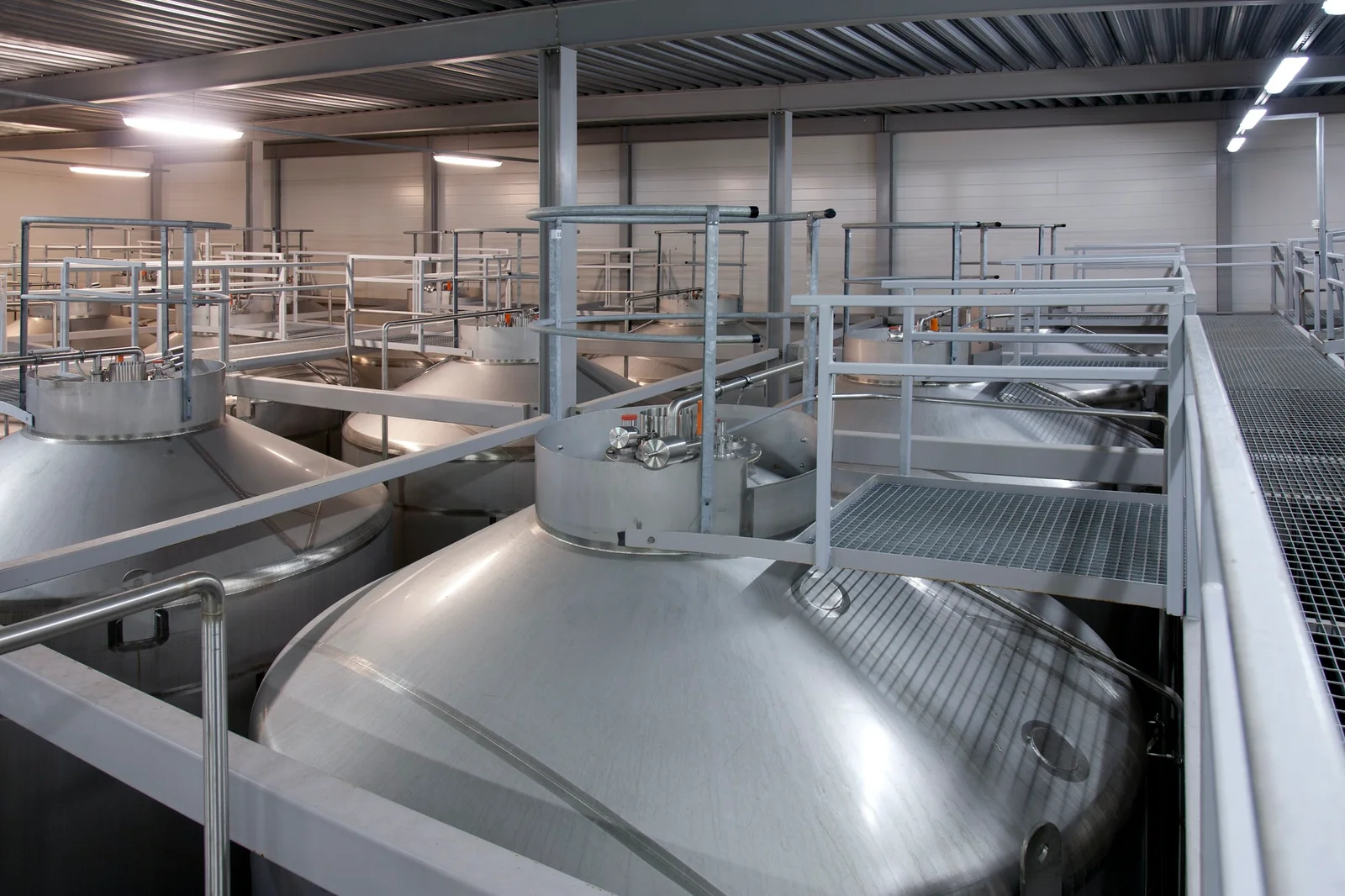 Labor costs and space utilization are another key dimension of savings. A set of standards for/Distillery/Winery All - In - One Solution usually equipped with central automation control platform, A technician can monitor the saccharification temperature (with an accuracy of ±0.5℃), fermentation density (real-time monitoring of specific gravity changes), and distillation process (precisely controlling the distilled alcohol content between 76%vol and 85%vol) through the touch screen. This enables production lines that traditionally required 3 to 4 full-time operators to be compressed to 1 to 2 for efficient management, reducing labor costs by nearly 50%. In terms of space, modular equipment highly integrates the traditional scattered functions such as mashing POTS, boiling POTS, fermenters, distillers and aging warehouses, reducing the required factory floor area by approximately 60%. For instance, an innovative distillery in The UK, "The Alchemist", has achieved an annual production capacity of 200,000 liters of beer, 50,000 liters of gin and 10,000 liters of liqueur within its 800-square-meter site by using integrated equipment. The floor efficiency is 2.3 times that of the traditional layout with the same output scale.
More importantly, this solution endows producers with unparalleled market response flexibility and risk resistance capabilities. In the face of rapidly changing consumption trends, producers can quickly switch to produce a batch of experimental New England IPA within 72 hours on the same system, and then produce a small batch of barrel-aged rum in the following week. This agility has compressed the average cycle from research and development to market launch of new products from 90 days to 45 days, and increased the success rate of new products by approximately 25%. During periods of supply chain fluctuations, a multi-product line structure can effectively diversify risks. For instance, when the price of hops fluctuates and rises by 15%, producers can temporarily tilt their production capacity towards distilled spirits with more stable profits by 10% to 20%, ensuring that the overall gross profit margin remains above 40%. This business model innovation enables small-scale producers to establish a unique advantage in the highly competitive market with a total start-up budget of less than 3 million RMB, as demonstrated by the German "Kombinierte Brennerei" factory, which won an industry award in 2023. It achieved profitability within 18 months of opening through an integrated solution, and its annual growth rate has remained at a high level of 30% continuously.
Labor costs and space utilization are another key dimension of savings. A set of standards for/Distillery/Winery All - In - One Solution usually equipped with central automation control platform, A technician can monitor the saccharification temperature (with an accuracy of ±0.5℃), fermentation density (real-time monitoring of specific gravity changes), and distillation process (precisely controlling the distilled alcohol content between 76%vol and 85%vol) through the touch screen. This enables production lines that traditionally required 3 to 4 full-time operators to be compressed to 1 to 2 for efficient management, reducing labor costs by nearly 50%. In terms of space, modular equipment highly integrates the traditional scattered functions such as mashing POTS, boiling POTS, fermenters, distillers and aging warehouses, reducing the required factory floor area by approximately 60%. For instance, an innovative distillery in The UK, "The Alchemist", has achieved an annual production capacity of 200,000 liters of beer, 50,000 liters of gin and 10,000 liters of liqueur within its 800-square-meter site by using integrated equipment. The floor efficiency is 2.3 times that of the traditional layout with the same output scale.
More importantly, this solution endows producers with unparalleled market response flexibility and risk resistance capabilities. In the face of rapidly changing consumption trends, producers can quickly switch to produce a batch of experimental New England IPA within 72 hours on the same system, and then produce a small batch of barrel-aged rum in the following week. This agility has compressed the average cycle from research and development to market launch of new products from 90 days to 45 days, and increased the success rate of new products by approximately 25%. During periods of supply chain fluctuations, a multi-product line structure can effectively diversify risks. For instance, when the price of hops fluctuates and rises by 15%, producers can temporarily tilt their production capacity towards distilled spirits with more stable profits by 10% to 20%, ensuring that the overall gross profit margin remains above 40%. This business model innovation enables small-scale producers to establish a unique advantage in the highly competitive market with a total start-up budget of less than 3 million RMB, as demonstrated by the German "Kombinierte Brennerei" factory, which won an industry award in 2023. It achieved profitability within 18 months of opening through an integrated solution, and its annual growth rate has remained at a high level of 30% continuously.
Labor costs and space utilization are another key dimension of savings. A set of standards for/Distillery/Winery All - In - One Solution usually equipped with central automation control platform, A technician can monitor the saccharification temperature (with an accuracy of ±0.5℃), fermentation density (real-time monitoring of specific gravity changes), and distillation process (precisely controlling the distilled alcohol content between 76%vol and 85%vol) through the touch screen. This enables production lines that traditionally required 3 to 4 full-time operators to be compressed to 1 to 2 for efficient management, reducing labor costs by nearly 50%. In terms of space, modular equipment highly integrates the traditional scattered functions such as mashing POTS, boiling POTS, fermenters, distillers and aging warehouses, reducing the required factory floor area by approximately 60%. For instance, an innovative distillery in The UK, "The Alchemist", has achieved an annual production capacity of 200,000 liters of beer, 50,000 liters of gin and 10,000 liters of liqueur within its 800-square-meter site by using integrated equipment. The floor efficiency is 2.3 times that of the traditional layout with the same output scale.
More importantly, this solution endows producers with unparalleled market response flexibility and risk resistance capabilities. In the face of rapidly changing consumption trends, producers can quickly switch to produce a batch of experimental New England IPA within 72 hours on the same system, and then produce a small batch of barrel-aged rum in the following week. This agility has compressed the average cycle from research and development to market launch of new products from 90 days to 45 days, and increased the success rate of new products by approximately 25%. During periods of supply chain fluctuations, a multi-product line structure can effectively diversify risks. For instance, when the price of hops fluctuates and rises by 15%, producers can temporarily tilt their production capacity towards distilled spirits with more stable profits by 10% to 20%, ensuring that the overall gross profit margin remains above 40%. This business model innovation enables small-scale producers to establish a unique advantage in the highly competitive market with a total start-up budget of less than 3 million RMB, as demonstrated by the German "Kombinierte Brennerei" factory, which won an industry award in 2023. It achieved profitability within 18 months of opening through an integrated solution, and its annual growth rate has remained at a high level of 30% continuously.
Keep reading
Three more stories from the desk, picked by the editors.
Data
The Rent vs. Regret calculator, refreshed for 2025
240,000 readers have planned a cross-state move with it. Here's what's new.
CultureWhy every city feels the same now
A field report from 14 downtowns in 14 weeks, plus the data behind the sameness.
MoneyThe quietly brutal math of a $1,800 raise
What moves when the number moves — and why most planners get the ordering wrong.
Filed under Default
← Back to the front page · Get the Daily Dish