
How Much Should You Invest in Commercial Brewery Equipment?
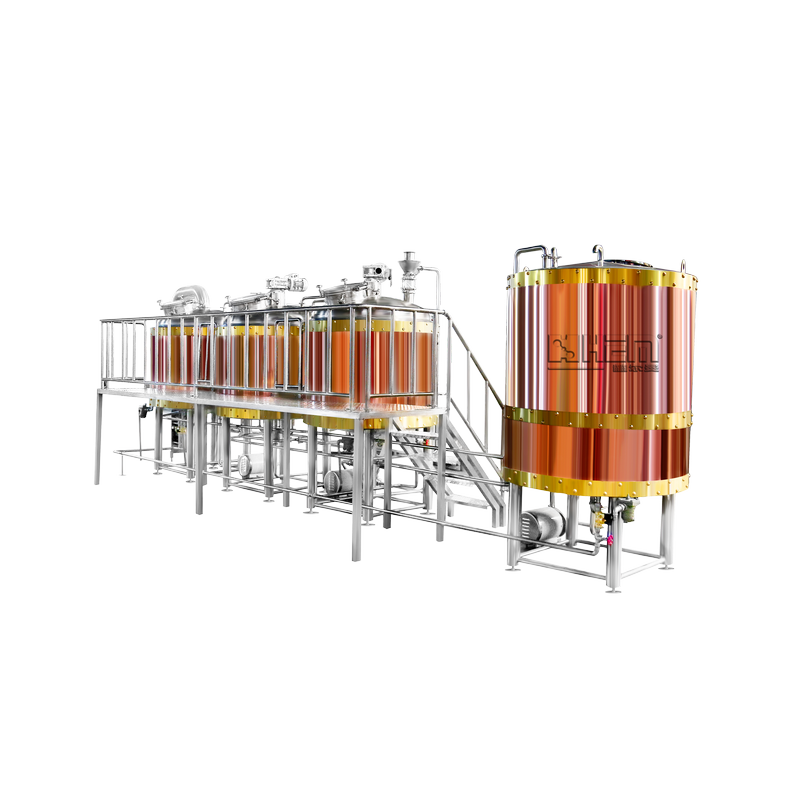
A startup requires $300,000 to $1.2 million in capital for a professional setup, where commercial brewery equipment accounts for 40% to 60% of total expenditure. A 10-barrel system typically consumes $150,000 upfront, while installation labor adds 25% to this initial procurement cost. Operational viability hinges on managing this high fixed-cost base against a margin target of 30% per barrel, requiring precise capacity planning to avoid under-utilization during the first 24 months of production.
Selecting a 10-barrel system demands a precise financial model to balance production volume with the $180,000 average price for a turn-key assembly. Manufacturing lead times for these units currently span 24 to 36 weeks, forcing operators to secure warehouse leases months before hardware delivery. Every additional piece of automation, such as digital temperature sensors or automated grain augers, increases initial procurement costs by 15% but reduces manual labor hours by nearly 12 hours per week in a typical 40-hour production schedule.
Maintenance budgets should account for 3% of the equipment value annually to address wear on seals, pumps, and cooling gaskets.
High-grade stainless steel grades, specifically 304L or 316L, prevent long-term corrosion and account for 70% of the material composition in reputable systems. Manufacturers using 304L steel often provide a 5-year warranty, which protects against structural failures that could otherwise cost $10,000 in emergency repairs. Sourcing from regions with established craft industry infrastructure often reduces the total landed cost by 10% when factoring in freight insurance and specialized logistics.
Integrating a canning line early in the growth phase shifts capital distribution, as a standard rotary filler capable of 40 cans per minute costs $120,000. Operators managing this output often see packaging costs reach 20% of the total wholesale price, making the efficiency of the filling mechanism a primary variable in profit calculation. Without consistent maintenance on these mechanical fillers, oxygen pickup rates can exceed 100 parts per billion, significantly reducing shelf stability and causing product returns.
| Equipment Component | Estimated Cost Range (USD) | Depreciation Period |
| Brewhouse (10 BBL) | $90,000 - $160,000 | 10 Years |
| Fermentation Tanks (10 BBL) | $12,000 - $25,000 | 15 Years |
| Cooling/Glycol Chiller | $15,000 - $30,000 | 7 Years |
| Steam Boiler | $20,000 - $45,000 | 10 Years |
Secondary infrastructure costs, such as glycol piping and steam line installation, frequently surprise new owners by adding 30% to the quoted hardware price. These utilities must be sized for 120% of the peak load to accommodate future expansion without requiring a total rip-and-replace of the piping grid. When a facility plan ignores these utility overheads, electricity and water usage can account for 8% of the gross revenue, pushing the break-even point significantly further into the future than initial spreadsheets predicted.
Proper insulation of glycol lines reduces energy loss by 20% during summer months, directly lowering monthly utility invoices in warm climates.
Purchasing pre-owned hardware from closed facilities provides a 40% reduction in upfront spending, but this path introduces hidden risks regarding the condition of heating elements and control boards. A 10% failure rate for used pumps and valves is common within the first 6 months of commissioning, which disrupts production cycles and adds unexpected replacement labor costs. Assessing used inventory requires an onsite audit by a professional engineer to confirm that pressure ratings still meet current regional safety standards.
Scaling from a 10-barrel to a 20-barrel output capacity requires a 60% increase in floor space to handle the larger footprint of the tanks and associated piping. This spatial requirement often forces a relocation or a structural building modification, which adds $50,000 to $100,000 to the total investment budget. By planning for this expansion during the initial site selection, owners avoid the massive capital hit that occurs when production demand outpaces the original facility design.
Maintaining a buffer of 15% of the total budget for unforeseen site requirements—such as specialized floor coatings or increased electrical amperage—prevents the project from stalling during the final 30 days of construction. These technical necessities, often overlooked in basic equipment quotes, define the long-term reliability of the workspace. A properly fitted floor drain system alone can cost $15,000 to install correctly, yet it prevents thousands of dollars in water damage over the first 5 years of operation.
Keep reading
Three more stories from the desk, picked by the editors.
The Rent vs. Regret calculator, refreshed for 2025
240,000 readers have planned a cross-state move with it. Here's what's new.
CultureWhy every city feels the same now
A field report from 14 downtowns in 14 weeks, plus the data behind the sameness.
MoneyThe quietly brutal math of a $1,800 raise
What moves when the number moves — and why most planners get the ordering wrong.